
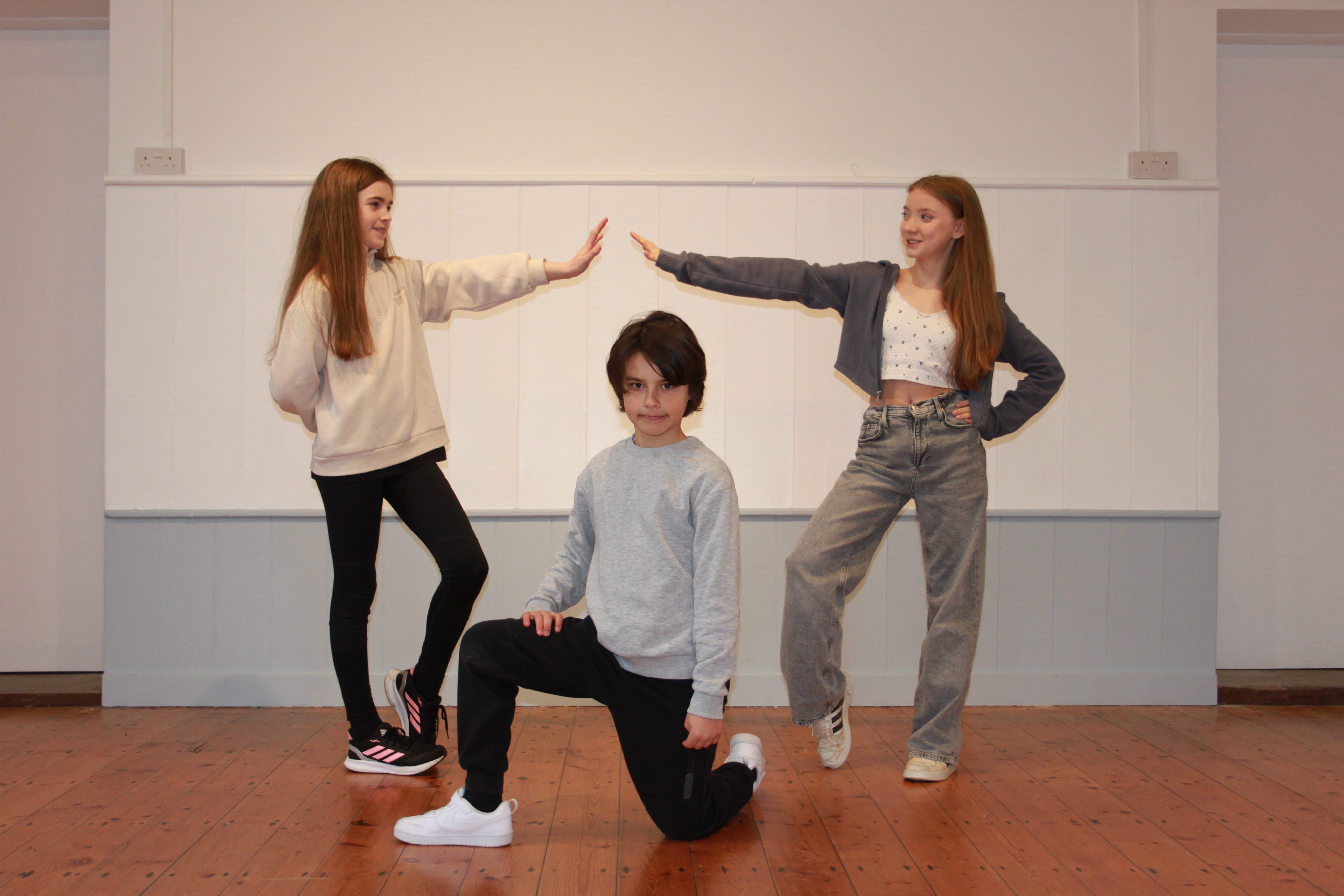
Is 10, 11, 12 or 13 Too Late to Start Dance/Drama/Performing Arts? | Beginners
Is 10, 11, 12 or 13 Too Late to Start Dance or Performing Arts?
If your child suddenly announces at 10, 11, 12 or 13 that they'd love to try dance, drama or musical theatre, you might find yourself wondering:
Have we left it too late?
Perhaps their friends have been dancing since they were three. Maybe they've watched other children perform and assumed everyone else already knows what they're doing. Or perhaps they've only recently discovered that they really love acting, dancing or musical theatre.
The good news is: 10, 11, 12 or 13 is absolutely not too late to start.
Children discover their interests at different ages, and there are actually some real advantages to beginning performing arts when they're a little older.
Is 10 too late to start dance?
Not at all.
There can sometimes be an assumption that children need to start dance when they're very young, particularly if they've seen dancers who have trained since preschool.
But children can begin dancing at many different ages.
A 10-year-old beginner might initially have less dance vocabulary than somebody who has attended classes for several years, but that doesn't mean they can't learn.
At this age, children can often understand corrections, remember choreography and become increasingly aware of how their bodies move. With regular practice and supportive teaching, they can make fantastic progress.
Most importantly, they don't need to “catch up” with everybody else before they're allowed to enjoy dancing.
They are allowed to be a beginner.
What about starting at 11, 12 or 13?
Exactly the same applies.
In fact, the pre-teen and early teenage years can be a brilliant time to discover performing arts.
Young people are developing their own tastes, interests and personalities. They may suddenly discover a love for a particular musical, start learning dances at home, become interested in acting or decide they'd like to feel more confident performing in front of others.
Starting later doesn't mean they've missed their opportunity.
It simply means their performing arts journey has started at a different point.
“But everyone else will be better than me…”
This is one of the biggest worries older beginners can have.
And it's completely understandable.
Walking into a class where you imagine everybody else already knows the terminology, steps or routines can feel daunting.
But a good performing arts class shouldn't expect a new student to arrive knowing everything.
That's what classes are for.
Students are there to learn.
Some children may have more experience in dance but have never acted before. Another child might be a confident actor but find choreography challenging. Someone else might have a lovely singing voice but feel nervous performing in front of people.
Every student has different strengths and different things they're still learning.
Performing arts shouldn't be about comparing yourself with the person standing next to you. It's about developing your own skills and confidence.
Does my child need to be naturally talented?
No.
One of the things I feel strongly about as a performing arts teacher is that classes shouldn't only be for children who already appear confident or “talented”.
Children come to classes to learn.
Technique can be taught.
Choreography can be learnt.
Acting skills can be developed.
Confidence can grow.
Musicality, coordination, expression, stage presence and performance skills all develop through practice and experience.
What matters far more to me when a beginner joins a class is that they're willing to have a go, learn and enjoy the experience.
What if my child isn't very confident?
They don't need to wait until they're confident before joining either.
Sometimes parents tell me that they'd love their child to try drama or performing arts, but they're worried because their child is shy.
My response is usually that confidence doesn't have to come before the class — developing confidence can be part of the reason for attending it.
Some children walk into their first class ready to stand centre stage.
Others initially prefer to watch.
Some will happily join a group activity but aren't ready to perform individually.
That's okay.
I believe children should be encouraged and gently challenged, but they should also be given the opportunity to build trust and confidence at their own pace.
Those small steps matter.
Joining in with a group.
Volunteering an idea.
Learning a routine.
Speaking a little louder.
Performing something they previously thought they couldn't do.
Those moments can feel enormous to the child experiencing them.
Which performing arts can an older beginner try?
There are lots of options.
At All Access Performing Arts, our students experience a range of performing arts, including:
Dance
Students can experience different dance styles throughout the year, which may include ballet, contemporary, lyrical, street dance, jazz, commercial and modern theatre.
Trying different styles can be particularly helpful for beginners because they get the chance to discover what they enjoy rather than feeling they have to specialise immediately.
Drama
Drama isn't simply learning lines.
Students can explore improvisation, scripts, character development, devising, voice, movement and performance.
It's also a fantastic opportunity to develop communication, creativity and confidence.
Musical Theatre
For children who love musicals, musical theatre combines acting, singing and movement.
They can develop characterisation, storytelling, vocal performance, choreography and stage presence while learning how the different elements work together.
And children don't need to be confident solo singers to begin musical theatre.
Does my child need to choose just one?
Not necessarily.
Some children immediately know that dance is their thing.
Others want to act.
And some want to do absolutely everything!
There are benefits to experiencing different areas of performing arts, particularly when children are still discovering what they enjoy.
At All Access, our Shooting Stars programme for ages 10–13 includes separate Drama, Dance and Musical Theatre sessions.
Children can choose one subject, combine two, or attend all three.
That means a child who is desperate to try drama but isn't sure about dancing doesn't have to commit to everything. Equally, somebody who loves performing can experience the full programme.
What if my child has never danced before?
That's absolutely fine.
Beginners aren't expected to arrive knowing dance terminology or choreography.
A supportive class should give students opportunities to learn the foundations while still feeling included in what the rest of the group is doing.
At All Access, we introduce students to a variety of styles rather than expecting them to have trained extensively in one particular discipline.
Children develop skills including coordination, musicality, technique, flexibility, performance quality and confidence as they progress.
What if they've never acted before?
That's fine too.
Drama is learned by doing it.
Games, improvisation, scripts, character work and creative exercises all give young people opportunities to experiment.
There's no expectation that a beginner should immediately be able to produce a polished performance.
Often, one of the loveliest things to watch as a teacher is a student gradually becoming more comfortable contributing ideas and expressing themselves.
Will my child have to perform on stage?
Performance opportunities can be an incredibly valuable part of performing arts training.
They give children something to work towards and can develop teamwork, resilience, commitment and confidence.
However, I also understand that standing on a stage can feel very different for a child who has only just begun.
At All Access, we work towards performances and special events, but confidence is built gradually.
I want children to feel proud of what they're achieving rather than feeling that they have to prove themselves.
What if my child tries it and doesn't like it?
Then they've still learnt something useful: that particular activity might not be for them right now.
Trying something doesn't have to mean making a huge commitment.
That's one reason we offer free trial sessions for our children's classes.
A trial gives your child the opportunity to meet us, experience the class and see how they feel before deciding whether they'd like to continue.
There's no expectation that they need to arrive confident, know anybody or already have experience.
What should they wear to their first class?
Don't worry about buying an entire dance wardrobe before they've even tried it!
For a first trial, comfortable clothing that allows your child to move freely is usually absolutely fine.
We can then advise you about appropriate classwear or footwear if they decide to continue.
The important thing for their first session is that they feel comfortable and can join in.
So, is 10–13 too late to start performing arts?
Definitely not.
There isn't one “correct” age to discover dance, drama or musical theatre.
Some children fall in love with performing at four.
Some discover it at ten.
Others don't step into their first dance or drama class until they're teenagers — or even adults.
Starting later doesn't make their interest any less valid.
The most important thing is finding an environment where they feel comfortable being a beginner, aren't afraid to make mistakes and are encouraged to develop at a pace that's right for them.
And who knows where that first class might lead?
Beginner Performing Arts Classes for Ages 10–13 Near Princes Risborough
At All Access Performing Arts, our Shooting Stars programme is specifically designed for young people aged 10–13.
Classes take place on Saturdays at St John's C of E School in Lacey Green, near Princes Risborough, and students can choose from:
 Drama
Drama Dance
Dance Musical Theatre
Children can attend one, two or all three sessions.
Complete beginners are very welcome. Your child doesn't need previous dance, drama or musical theatre experience — just an interest in giving it a try.
Ready to give it a try?
Your child can come along for a FREE trial before deciding whether they'd like to join.
They don't need to know anyone.
They don't need to know the routines.
They don't need years of experience.
They just need to take that first step.